| เครื่องบินขับไล่แบบ ๑๒ (Ki 27 Otsu) |
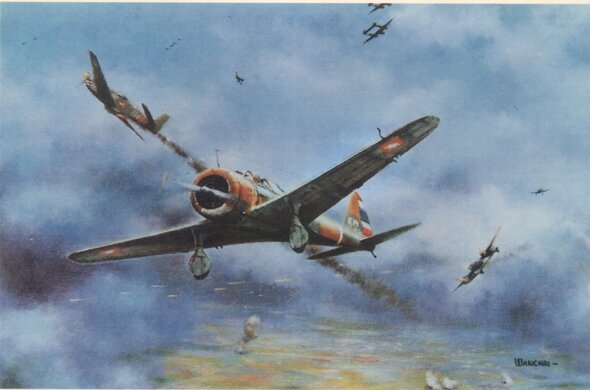
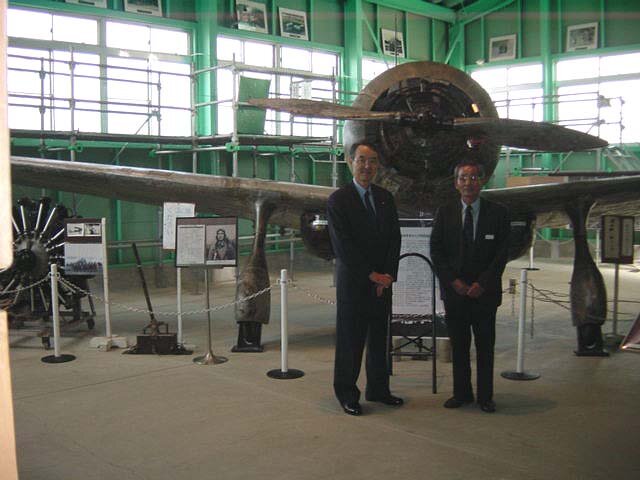
เครื่องบินขับไล่แบบ ๑๒ (Ki 27 Otsu) ซื้อจากประเทศญี่ปุ่น ๑๒ เครื่อง
ใช้ปฏิบัติการทางอากาศในสงครามมหาอเซียบูรพา อยู่ในประจำการถึง ปี พ.ศ. ๒๔๘๗
| เครื่องบินขับไล่แบบ ๑๒ (Ki 27 Otsu) |
เครื่องบินแบบ ๑๕ ( Otsu ) หรือ บ.ข. ๑๒
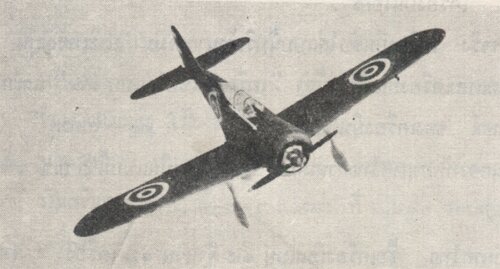
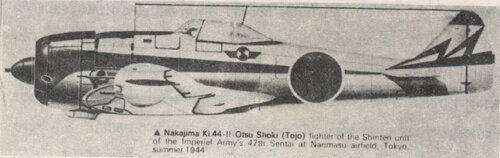
| รายการทั่วไปและรายการสมรรถนะของ บ.ข. ๑๒ ( เดิมเรียกว่าแบบ ๑๕ ) | |
| ประเภท | เครื่องบีนขับไล่ |
| ผู้สร้าง | บริษัทนากาจิมา ประเทศญี่ปุ่น (สำหรับ บข. ๑๒ ของ ทอ. ไทย ผลิตจากโรงงานแมนตส์ยู เมืองฮาร์บิน แมนจูเรีย ) |
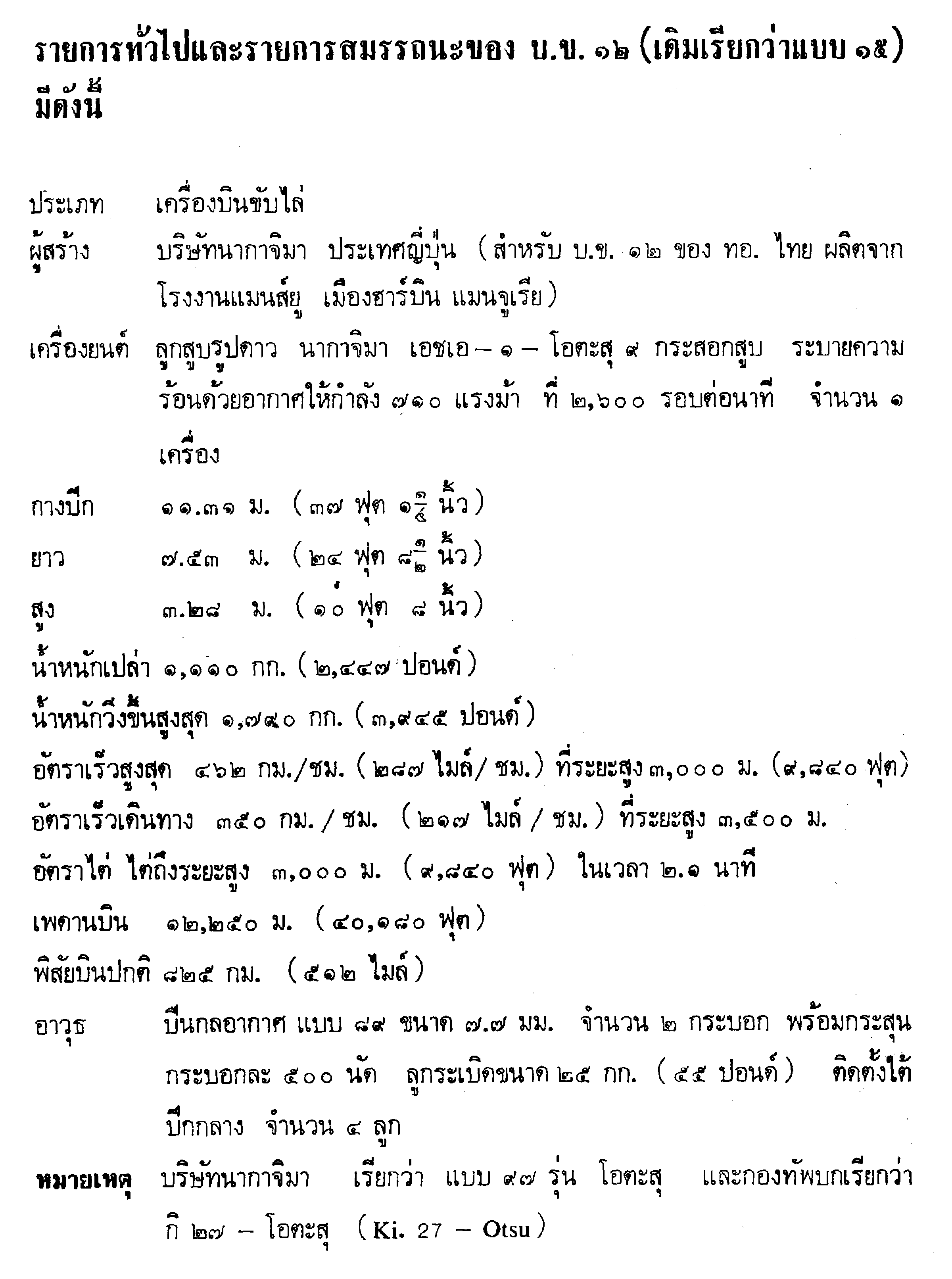
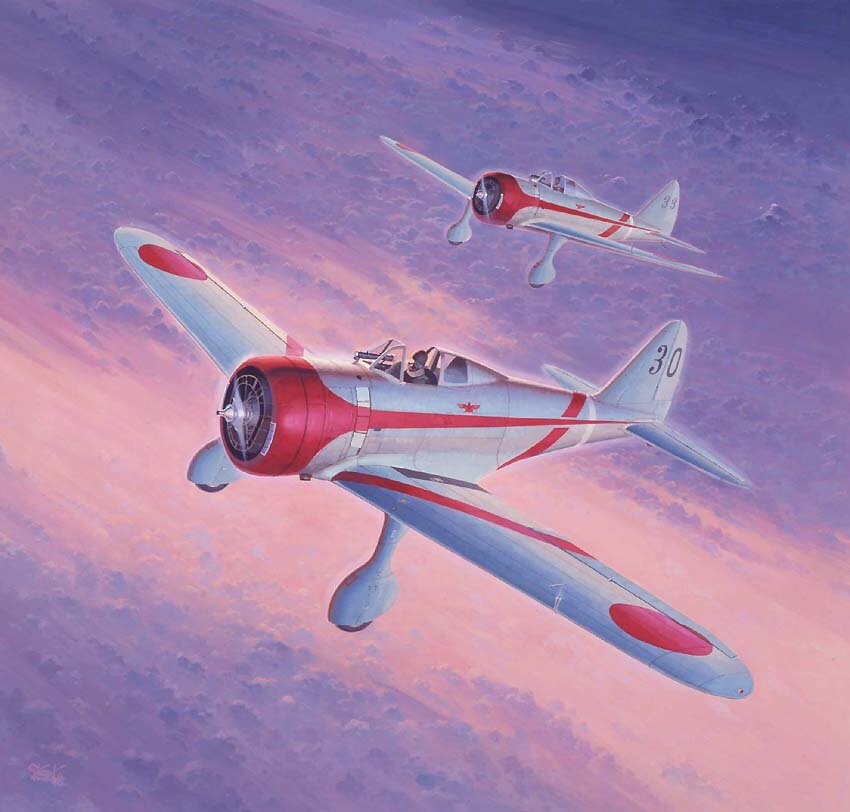
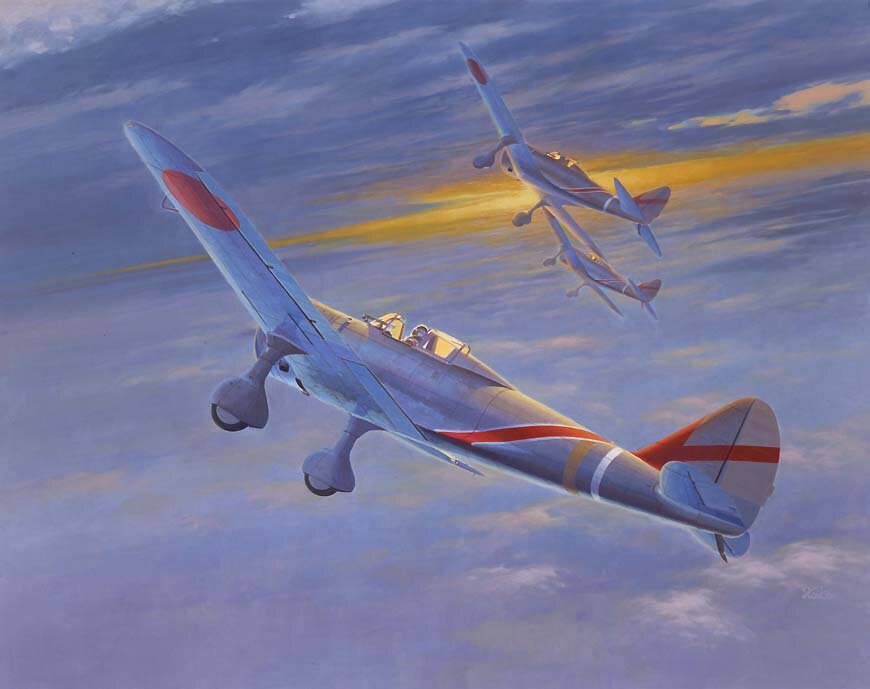
Nakajima Type 97 Fighter ( Ki-27 )
http://www.ne.jp/asahi/airplane/museum/cl-pln6/97Fighter.html
|
Nakajima Ki-27 (Nate)
|
Nakajima Ki-27 (Nate)
-~- Written and Researched by Paul D. Alexander
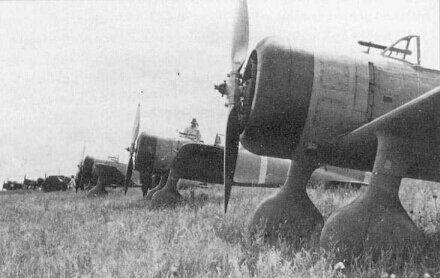
When the Sino-Japanese Incident opened on July 7, 1937, the Japanese Army Air Force was in the midst of a re-equipment program and had to leave the brunt of the fighting to the Japanese naval air arm, which was on the whole better equipped and much more combat ready. The Japanese Army was assigned the task of air support in the north and defending Manchukuo (Manchuria, which was a Japanese protectorate at the time). This was a relatively easy job, and so the Army Air Staff took advantage of the time gained to begin overhauling the JAAF. In particular, modern aircraft were rapidly introduced-the Mitsubishi Ki-21 “heavy” bomber, the Mitsubishi Ki-30 and Kawasaki Ki-32 light bombers, the Mitsubishi Ki-15 reconnaissance plane, and the Nakajima Ki-27 fighter. The last-mentioned plane was a low-wing cantilever monoplane with fixed landing gear and an enclosed canopy. Although slower than its European contemporaries, the Messerschmitt Bf-109 and the Hawker Hurricane, the Ki-27 did a great deal to make the JAAF a modern, effective air force, and it was the forerunner of the Ki-43 Hayabusa, which it resembled to a certain extent.
In 1934 the Japanese Army issued a specification for a replacement for its then-current fighter, the Kawasaki KDA-5 biplane fighter. Kawasaki submitted a refinement of the KDA-5, the Ki-10 (at this time the Army changed their designation system to the kind used through the end of the Pacific War), while Nakajima entered the Ki-11, a monoplane which closely resembled the American Boeing P-26, but with the addition of an enclosed canopy. The Ki-11 was the faster of the two by a comfortable margin, but the Ki-10 was far more maneuverable, as befitted a biplane, and so the Army deemed the Ki-10 the winner. Nakajima, however, had acquired a lot of data both from the Ki-11 and a related design, the Ki-12, which featured a liquid-cooled Hispano-Suiza 12-cylinder engine with an engine-mounted 20mm cannon. Deciding that the monoplane was definitely the wave of the future, Nakajima proceeded to work on a private venture fighter design, the Type PE. When the PE was in its design stage, the Army issued a new requirement for a monoplane fighter in June 1935, vindicating Nakajima’s perspicacity. To fulfill this requirement, Kawasaki created the Ki-28, while Mitsubishi submitted a de-navalized version of their A5M carrier fighter, the Ki-33. In the meantime, Nakajima decided to refine the PE’s design into an entirely new machine, designated Ki-27.
The sole PE first flew in July 1936 and the first Ki-27 prototype followed it in October. The PE provided much useful research information which was incorporated into the Ki-27 even as it was being finished. Both planes were low-wing cantilever monoplanes with fixed, spatted undercarriages, powered by the Nakajima Ha-1a engine, a 650-hp nine-cylinder radial driving a two-bladed variable-pitch propeller. They differed in minor details affecting the engine cowling, the canopy, the undercart spats, and the vertical tail surfaces. The PE was also used to test the “butterfly” or “combat” flaps, which Nakajima used in all of their wartime fighters to improve their maneuverability. Chief Engineer T. Koyama, in designing the PE and the Ki-27, created airplanes with a remarkably light but sturdy structure, and made use of a special airfoil section Nakajima had created, to add to the new fighter’s maneuverability.
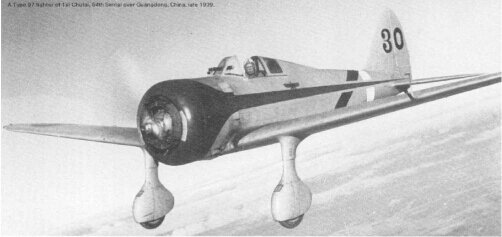
The first Ki-27, which flew from Ojima Airfield for the first time on October 15, 1936, had a wing area of 176.527 square feet, and was joined in December of that year by a second prototype with a larger wing of 189.444 sq. ft. Following their manufacturer’s trials, they were sent to the Army Air Technical Arsenal at Tachikawa for competitive trials against the Ki-28 and Ki-33. During these trials, the second Ki-27 proved to be the slowest of the three types, achieving 291 mph as compared to the Ki-28’s 301 mph and the Ki-33’s 295 mph. The Ki-27 was rated second in climb, reaching 16,405 feet in 5 minutes 38 seconds (the Ki-28 was first at 5 min. 10 sec. and the Ki-33 was third with 5 min. 56 sec.). But the Ki-27 was the hottest performer in dogfighting, and so it was selected to be the JAAF’s first monoplane fighter. Ten pre-production examples were ordered, which were completed between June and December 1937.
To improve the Ki-27’s maneuverability even more, it was decided to increase the wingspan of the pre-production machines, so the span was extended to 37 ft. 1 ผ in., giving the aircraft a wing area of 199.777 sq. ft. The pre-production machines retained the telescopic gunsight, but the open canopy with a long, streamlined forward section was replaced by a simpler enclosed canopy. It was plain that an enclosed canopy would be a necessity, both to increase the type’s speed and to protect the pilot from the harsh Manchurian winters. By the end of the year, the new fighter was accepted for service as the Army Type 97 Fighter Model A, or Ki-27a.
The Ki-27a was powered by a Nakajima Ha-1b engine rated at 780 hp at 9,515 feet, and was armed with a pair of synchronized 7.7mm machine guns in the forward decking of the upper fuselage. By March 1938, the type was in action over Northern China and was swiftly recognized as an excellent fighter as it wrested control of the skies from the Chinese. That spring, the Japanese Army reorganized its air units; mixed units of fighters, bombers, and recon planes were replaced by specialized sentais of only one aircraft type. The 58th Sentai was the first equipped exclusively with Ki-27a fighters. Five more sentais were ready by September.
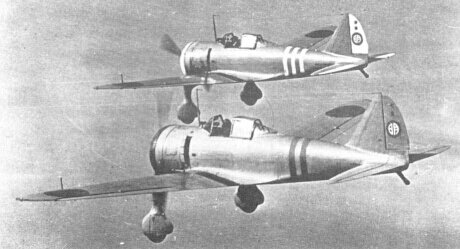
Eventually, production gave way to the Ki-27b, which was characterized by clear vision panels in the canopy’s rear section to improve rearward visibility, a redesigned oil cooler, and provision under the wing center section for the carriage of either four 55-lb. bombs or two slipper-type 28.6-gallon drop tanks. When this type was employed in gunnery training, a small movie camera could be attached to the port wing near the wing root. In addition to Nakajima, production of the Ki-27b was also undertaken by Mansyu in Harbin, Manchukuo.
For three months in the summer of 1939, the JAAF was engaged in combat against the Soviet Union in the region called variously Khalkin Gol, or Nomonhan. This encounter saw some of the most furious fighting of the whole war, yet is not very well known to Westerners. The Ki-27b, being the most common JAAF fighter, was very heavily engaged here. One of the most extraordinary stories of Khalkin Gol is that of Warrant Officer Hiromichi Shinohara of the 11th Sentai, the highest-scoring Japanese Army ace of all time. In those three months of combat he was credited with 58 confirmed victories, including a record 11 in a single day on June 27, 1939. He was nicknamed “the Richtofen of the Orient” for his amazing skill. Sadly, he blazed like a meteor and as quickly faded out, for he was shot down and killed on August 27, 1939, during a bomber escort mission-but not before he scored his last three victories. Shinohara was, like most top fighter aces, a highly skillful shot, and he rarely wasted ammunition. He was posthumously promoted to second lieutenant, as per the Japanese custom of promoting dead heroes by two ranks. Other Japanese Army aces of this time included Master Sergeant Bunji Yoshiyama (also of the 11th Sentai), with 25 kills, M/Sgt. Shogo Saito of the 24th Sentai, also with 25, and M/Sgt. Masatoshi Masuzawa of the 1st Sentai, with 12.
The Khalkin Gol fighting ended only because both sides were well-nigh exhausted by their efforts-and the Russians were alarmed by the beginning of World War II in Europe. Despite the record of W/O Shinohara, the two main lessons learned by the JAAF from this nasty little border conflict were (a) the relative uselessness of rifle-caliber machine guns against modern fighters, and (b) the Japanese lack of radios reduced their fighters’ effectiveness. Radios were installed in the Ki-27b after this, but upgrading the Japanese Army fighters’ armament would have to wait for the Ki-27’s successor, the Ki-43 Hayabusa. The Japanese claimed 1,162 enemy aircraft destroyed in aerial combat, while losing 162 of their own, but the Russians claimed 650 aerial kills for a loss to themselves of 207. The full truth of Khalkin Gol/Nomonhan may never be known, but the best evidence is that the Japanese, overall, got the worst of it in this “dress rehearsal” for World War II.
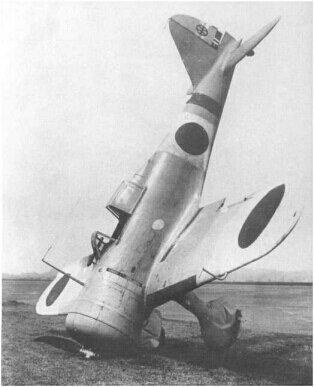
At the beginning of the Pacific War, five Ki-27-equipped sentais were deployed to support the campaigns in the Philippines, Malaya, Burma, and the Dutch East Indies, while others continued holding the line in China and Manchukuo. Still others provided the main air defense of the home islands until 1943. Obsolescent though it was, the Ki-27b still managed to score some successes against the Allies, who identified it with the code names Nate or Abdul. The former name was standardized by the turn of 1943, but by that time, most sentais were re-equipping with Ki-43s, Ki-44s, or Ki-61s, and the Ki-27 was restricted to second-line duties in Japan or Manchukuo. Indeed, the puppet Manchukuo Air Force used the Ki-27b-which, as mentioned, was built there-as its main-strength fighter aircraft for the entire war.
In 1940, the Ki-43 was experiencing difficulties, as related in the article pertaining to this type, so Nakajima designed the improved K-27-KAI as a fall-back measure, just in case. This version was lightened compared to the Ki-27b; maximum speed was raised slightly to 295 mph and wing loading was reduced to 16.4 pounds per square foot, but although two examples were built and flown, the Ki-43’s teething troubles were resolved, and so production of this version was not undertaken.
Total production of the Ki-27 came to 3,399, including 2,020 by Nakajima (which ceased production in 1942) and the remainder by Mansyu (which kept the type in production for the duration of the war). During the final two years of the war, many Ki-27s were used as advanced fighter trainers; for this role, the spats were removed from the undercarriage, and the tail-skid was replaced by a proper tailwheel. Some of these were armed with a bombload of up to 1,102 pounds during the last months of the war and expended as suicide attackers.
Top of article
Type:
Single-seat fighter, all-metal construction with fabric-covered control surfaces.
Accommodation:
Pilot on enclosed cockpit.
Powerplant:
(Type PE, prototypes and pre-production aircraft) One Nakajima Ha-1a nine-cylinder air-cooled radial engine, rated at 710 hp for take-off and 650 hp at 6,560 ft.
(Ki-27a, Ki-27b, Ki-27-KAI, and trainer variants) One Nakajima Ha-1b nine-cylinder air-cooled radial, rated at 710 hp for take-off and 780 hp at 9,515 ft.
Armament:
(All versions) Two fuselage-mounted 7.7mm machine guns.
External stores (Ki-27b and trainers):
Four 55-lb bombs or two 28.6-gallon drop tanks; up to 1,102 lbs. of bombs for suicide attack role.
Dimensions, weights, and performance:
Wingspan, 37 ft. 1 ผ in.;
length, 24 ft. 8 7/16 in.;
height, 10 ft. 7 15/16 in.;
wing area, 199.777 sq. ft.;
empty weight, 2,447 lb.;
loaded weight, 3,946 lb.;
wing loading, 19.75 lb./sq. ft.;
power loading, 5.2 lb./hp;
maximum speed, 292 mph at 11,480 ft.;
cruising speed, 217 mph at 11,480 ft.;
climb to 16,405 ft., 5 min. 22 sec.;
service ceiling, N/A;
normal range, 390 miles;
maximum range, 1,060 miles.
Sources: Francillon, Japanese Aircraft of the Pacific War; Green, Warplanes of the Second World War, Vol. 3: Fighters; Sakaida, Japanese Army Air Force Aces 1937-45.